Dendrite cell therapy
Home / Dendrite cell therapy

- Prostate cancer
- Colorectal cancer
- Ovarian cancer
- Breast cancer
- Melanoma (skin cancer)
- Pancreatic cancer
- Renal cell carcinoma (kidney cancer)
- Stimulating your immune system to recognize and destroy cancer cells.
- Providing immune system components, like proteins, to enhance the body’s ability to target cancer cells.
Personalized Treatment Plan
Every patient’s treatment is carefully customized to their unique cancer profile. Our medical team conducts a comprehensive assessment, including reviewing medical history, physical exams, and necessary imaging (e.g., CT scans), to ensure the therapy is suited for each individual.
Custom Vaccine Creation
Once you are deemed eligible, we prepare your personalized dendritic cell vaccine. This involves:
- Cancer Biopsy: A small tissue sample from the tumor is collected.
- Blood Sample: We collect 50 ml of your blood to isolate important immune cells, such as monocytes.
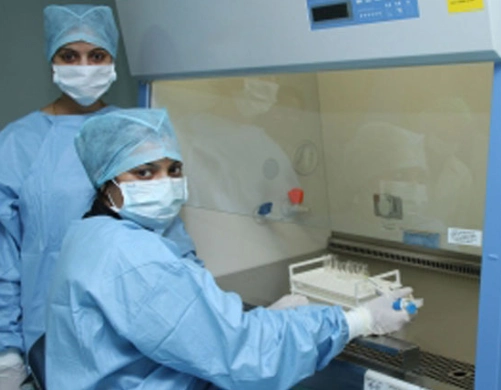
In our state-of-the-art lab, tumor antigens are extracted from the biopsy sample through a specialized process. Simultaneously, your blood sample is processed to produce immature dendritic cells, which are then primed with the tumor antigens.
After a rigorous quality check, these potent dendritic cells are ready to fight your cancer.
Treatment Administration
Each dendritic cell infusion is administered under the supervision of an expert oncologist. The infusion takes approximately 30 minutes and is performed in a safe, sterile environment. The number of doses required depends on the type and stage of your cancer, typically ranging from 3 to 6 doses.
Post-Treatment Monitoring
After completing your recommended cycles, we conduct CT or PET scans along with blood tests to evaluate the effectiveness of the treatment. Most patients report tumor shrinkage, an improved quality of life, and extended survival rates.
Requirement
Whole blood 100 ml Biopsy sample of cancer tissue or Recombinant proteins
Duration
Total 8 days are require to prepare dendritic cell vaccination
Product
Dendritic cell formulation contain 3 doses each of 5-10 million DCs. Each has to be administer after every 2 weeks
At what cancer stage should a patient consider Dendritic Cell therapy?
- The disease is stable
- The patient is free of disease but at a risk for recurrence
- Palliation is required
- Patient requires immune-therapy in addition to ongoing chemo/radiation therapy
- When all other treatment options have been exhausted
- When the patient is not fit to receive chemo/radiation
If you or your loved ones are battling cancer, especially in advanced stages, dendritic cell therapy offers a lifesaving alternative to traditional treatments.
Whether newly diagnosed or relapsed, this therapy can improve outcomes and provide new hope in the fight against cancer.
- Targeted Anti-Tumor Response: Directly triggers an immune response against cancer cells, often leading to tumor regression.
- Increased Survival Rates: Proven to extend life expectancy, even in advanced cancers.
- Prevents Recurrence: Helps reduce the chance of cancer returning.
- Improved Quality of Life: Minimal side effects compared to traditional treatments like chemotherapy.
- Safe to Combine with Other Treatments: Can be used alongside chemotherapy or radiation for a stronger anti-cancer effect.
- Dendritic Cell Therapy has been extensively studied and is considered a safe and well-tolerated treatment for cancer. Most patients experience:
- Mild to moderate fever for 24-48 hours after administration.
- Temporary lethargy or weakness for a few days after the infusion.
- No serious adverse reactions have been reported in over 200 clinical trials.
- There are no major side effects to dendritic cell therapy, and Some patients may experience mild-moderate grade fever after vaccine administration lasting 24-48 hours
- Some may experience lethargy/weakness for few days. None of patients has experienced any anaphylactic reaction till date
NOVO Infrastructure